1. Introduction: The AI Accent
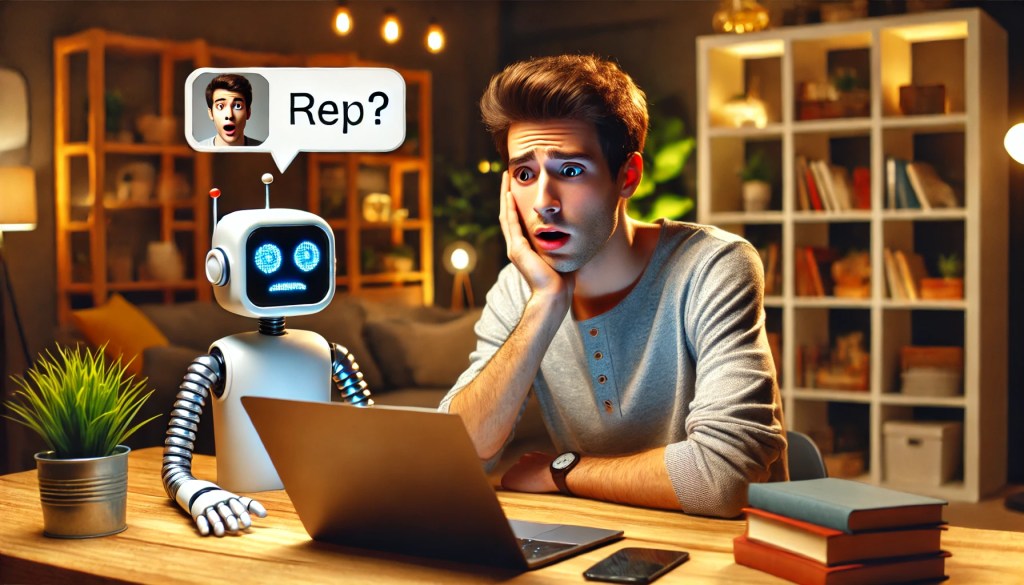
Picture this: You’re chatting online with someone who’s witty, articulate, and knowledgeable about everything from quantum physics to the best way to make a grilled cheese sandwich. Then it hits you – you’re not talking to a human, but to an AI. Mind. Blown.
Welcome to the brave new world of artificial intelligence, where machines don’t just crunch numbers but also write poetry, crack jokes, and occasionally make us question our own intelligence. But here’s the million-dollar question: Is AI truly mastering language, or just really good at faking it?
You’ve probably heard the buzz (or should I say, the binary chatter?) about AI language models like ChatGPT, Claude, and their silicon-brained siblings. Some folks are singing their praises, claiming these digital wordsmiths are the best thing since autocorrect. Others? They’re not so sure, muttering about weird word choices and grammar that’s just a bit… off.
So, what’s the deal? Is AI butchering the English language (and others) with the finesse of a bull in a china shop? Or is it holding up a mirror to how we communicate in this age of LOLs, emojis, and 280-character hot takes?
In this linguistic rollercoaster of a blog post, we’re diving deep into the world of AI-generated language. We’ll explore how these digital polyglots learn to speak (spoiler: it involves a lot of internet), why your grammar-obsessed aunt might not be AI’s biggest fan, and why AI seems to speak ‘American’ better than ‘Italian’ (no, it’s not because of an addiction to pepperoni pizza).
We’ll also tackle some thorny questions: Are some countries giving AI the cold shoulder when it comes to language learning? And could copyright laws end up giving our AI friends a linguistic lobotomy?
Strap in, language lovers and tech enthusiasts. Whether you’re Team “AI is the Future of Communication” or Team “Get Off My Linguistic Lawn,” this blog post promises to be an eye-opener. Let’s embark on this journey to figure out if AI is mangling or mastering the art of human language. After all, in the words of an AI I once knew, “Syntax error is just another way of saying ‘creative expression’.”
…Or is it?
2. The Training Data Tango
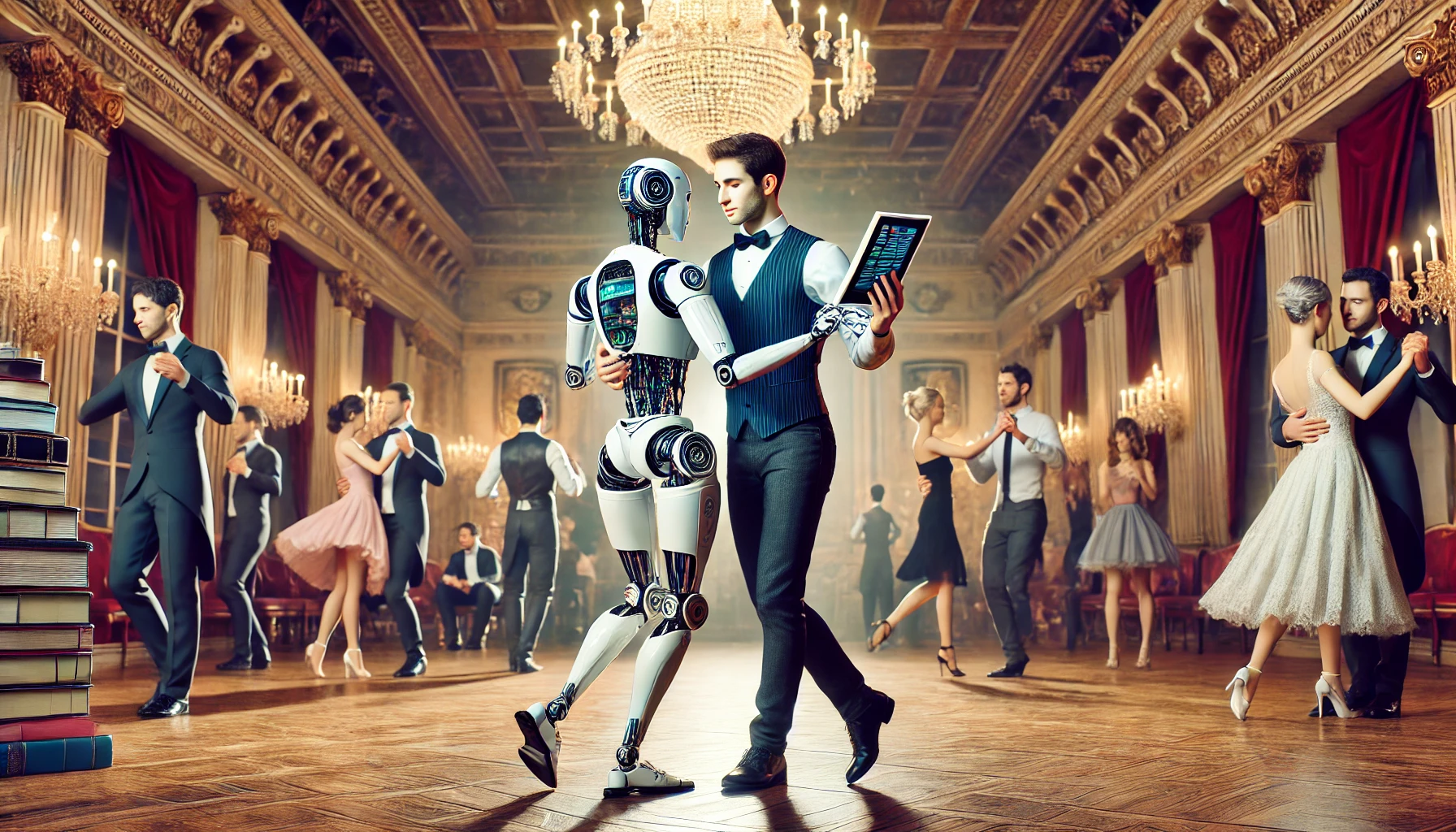
Alright, language lovers, strap on your digital dancing shoes because we’re about to do the Training Data Tango! It’s time to peek behind the curtain and see how our AI friends learn to speak (or type) without ever attending a single grammar class or suffering through an “i before e except after c” mnemonic.
How AI Learns Language: A Crash Course in Digital Linguistic Osmosis
Imagine a newborn AI. It’s not crying for milk; it’s thirsting for data. Lots and lots of data. We’re talking about a hunger that would make your Twitter doom-scrolling habit look like amateur hour.
AI language models learn through a process that’s part all-you-can-eat buffet, part extreme speed-reading competition. They devour vast amounts of text from the internet, books, articles, and probably your old LiveJournal entries (yes, even the ones about your emo phase – the AI doesn’t judge).
This process, dubbed “training,” is less like traditional learning and more like linguistic osmosis on steroids. The AI isn’t memorizing dictionaries or grammar rules. Instead, it’s noticing patterns, making connections, and becoming the world’s most sophisticated pattern-recognition machine.
The Internet: A Melting Pot of Linguistic Gold (and Sometimes Fool’s Gold)
Now, here’s where things get interesting (and a little bit messy). The internet, bless its chaotic heart, is the primary source of this linguistic feast. And let’s face it, the internet isn’t exactly known for its impeccable grammar or highbrow discourse.
This digital melting pot includes:
- Pulitzer-prize winning articles 📰
- Drunk tweets at 2 AM 🍺
- Meme-speak and internet slang 🐸
- Corporate jargon that makes no sense but sounds important 📊
- That one guy’s blog about conspiracy theories and cat breeding 🐱👽
The AI slurps it all up indiscriminately. It’s like letting a toddler loose in a library that also happens to contain a few dumpsters. Sure, they might pick up Shakespeare, but they’re just as likely to come back quoting “doge” memes.
This is why AI sometimes sounds like a particularly eloquent professor who occasionally slips into saying “LOL” or “YOLO” mid-lecture. It’s not a bug; it’s a feature of learning from the wildest language experiment in human history: the internet.
The Balancing Act
But wait, you might say, if AI is learning from all this varied (and sometimes questionable) data, how does it manage to sound coherent at all?
Well, that’s where the magic of machine learning algorithms comes in. These algorithms are designed to find the signal in the noise, to distill some kind of linguistic common ground from the cacophony of internet-speak.
It’s like if you tried to learn English by watching every YouTube video ever made. Somehow, through sheer exposure and some clever pattern recognition, you’d probably end up with a pretty good grasp of the language – albeit with some rather interesting quirks.
The result? AI language that’s a fascinating mix of formal and informal, sometimes brilliantly articulate and occasionally… well, let’s just say “creatively expressed.”
So the next time you’re chatting with an AI and it suddenly drops a “yeet” into an otherwise scholarly discussion about quantum mechanics, you’ll know why. It’s not having an existential crisis; it’s just showing off its eclectic linguistic upbringing.
In our next thrilling installment, we’ll explore how this AI linguistic sausage-making process is received by different generations. Spoiler alert: Your grammar-obsessed aunt might not be impressed, but your meme-loving nephew? He’s here for it.
Stay tuned, language explorers. The AI accent is just getting warmed up!
3. Grammar Enthusiasts vs. Language Libertarians
Ah, language. It’s the Swiss Army knife of human expression, capable of crafting sonnets, closing business deals, and starting arguments on the internet. But when it comes to AI-generated language, we’re seeing a clash of linguistic titans that’s more heated than the great “gif” pronunciation debate of 2013 (it’s clearly a hard ‘g’, but I digress).
The Generational Divide in Language Perception
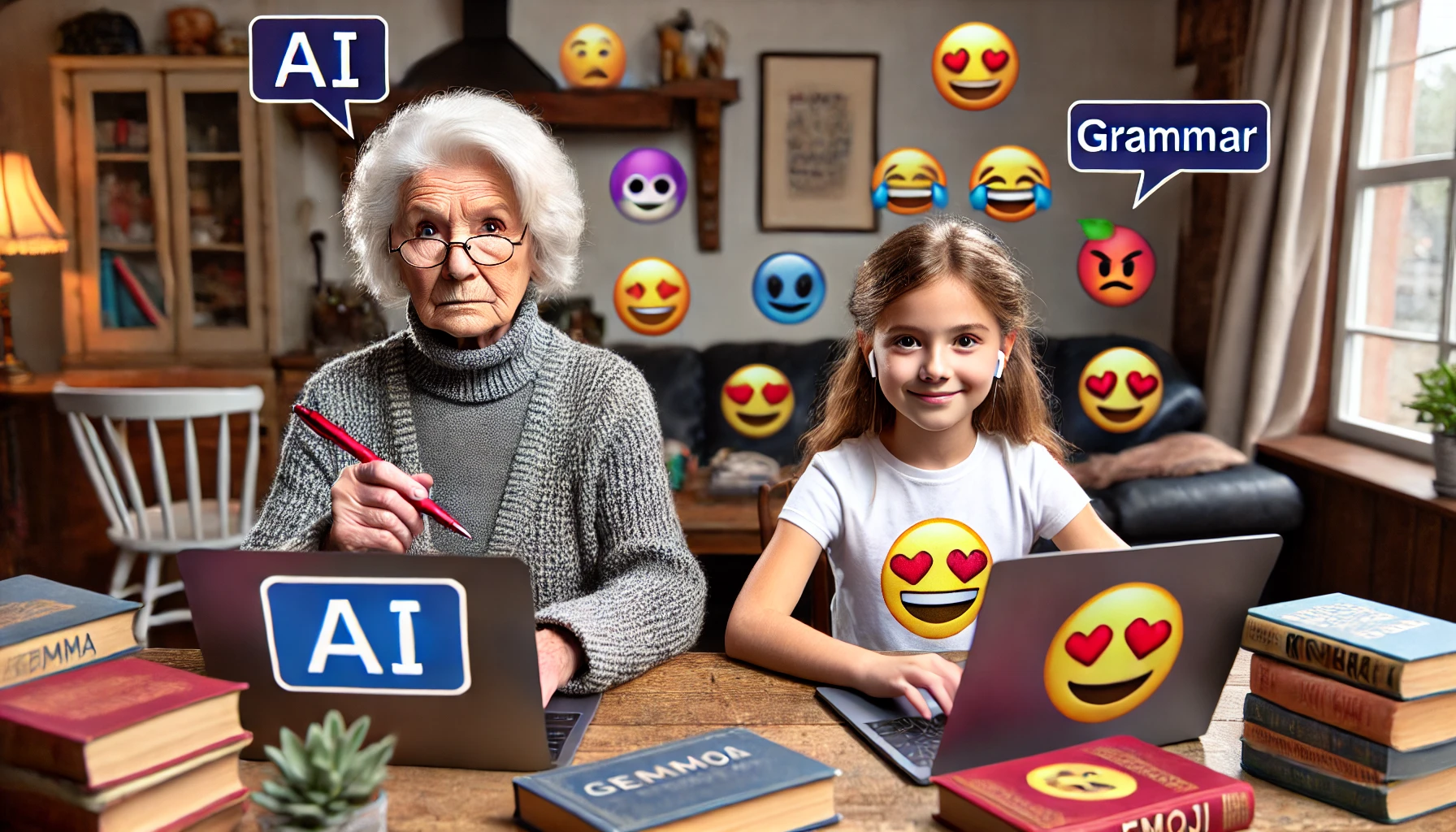
Picture this: You’ve got your Aunt Edna, a retired English teacher with a red pen permanently attached to her hand, sitting next to your cousin Zoe, who communicates primarily in emoji and considers “yeet” a valid verb form. Now, show them both the same AI-generated text. The reactions? Let’s just say they’re about as aligned as a mismatched pair of socks.
On one side, we have the Grammar Enthusiasts. These are the folks who can spot a misplaced comma from a mile away and who firmly believe that ending a sentence with a preposition is something up with which we should not put. To them, language rules are the bedrock of clear communication, and deviation is… frowned upon (not “frowned on,” Aunt Edna reminds us).
On the other side, we have the Language Libertarians. These are the linguistic mavericks who view grammar more as guidelines than actual rules. They’re the ones adding “literally” to the dictionary as an intensifier, much to the chagrin of literal linguists everywhere. To them, language is a living, breathing entity that should evolve with the times.
And in the middle? Our AI language models, trying their best to please everyone like a linguistic people-pleaser at a grammar convention.
When “Correct” Becomes “Outdated”: The Shifting Sands of Linguistic Norms
Here’s the kicker: language is about as static as a caffeinated squirrel. What’s considered “correct” today might be seen as stuffy or outdated tomorrow. Remember when “thee” and “thou” were the height of proper English? Pepperidge Farm remembers (and so does AI, because it probably read that meme during training).
AI, in its infinite digital wisdom, is capturing this evolution in real-time. It’s like a linguistic snapshot of our collective communication style, complete with all the new slang, shifting grammar norms, and yes, even the occasional typo that’s become so common it’s practically punctuation (looking at you, “definately”).
This is where our Grammar Enthusiasts might start to twitch. To them, AI sometimes reads like a teenager who swallowed a dictionary and a book of memes, then tried to write a thesis. It’s grammatically correct(ish), but something feels… off.
Meanwhile, the Language Libertarians are living their best lives. To them, AI speaks the language of the people – fluid, adaptable, and unencumbered by the dusty rules of yesteryear. It’s not incorrect; it’s avant-garde!
Finding Common Ground in the Linguistic Landscape
But here’s a thought: what if both sides have a point? (Gasp! Compromise on the internet? Surely not!)
The Grammar Enthusiasts aren’t wrong when they say that rules help maintain clarity and precision in language. After all, there’s a big difference between “Let’s eat, Grandma!” and “Let’s eat Grandma!” (The latter being a much darker family dinner).
And the Language Libertarians have a point too. Language that doesn’t evolve is a language that dies. Just ask Latin how it’s doing these days.
AI, in its bumbling, binary brilliance, is trying to walk the line between these two worlds. It’s striving for grammatical correctness while also capturing the dynamic, ever-changing nature of how we actually communicate.
The result? A form of language that’s sometimes brilliantly articulate, occasionally bafflingly modern, and often a quirky mix of both. It’s like watching a time-traveling professor try to fit in at both a Victorian tea
party and a modern-day music festival.
So, the next time you’re reading AI-generated text and you’re not sure whether to break out the red pen or the cry-laughing emoji, remember: you’re witnessing the fascinating evolution of language in real-time. It might not be perfect, but then again, neither is human communication.
And who knows? Maybe in a few years, we’ll all be ending our sentences with a binary code sign-off. Until then, keep your mind open and your spell-checker handy. The AI language revolution is just getting started. 01100011 01101000 01100101 01100101 01110010 01110011 00100001
4. The Global Language Gap
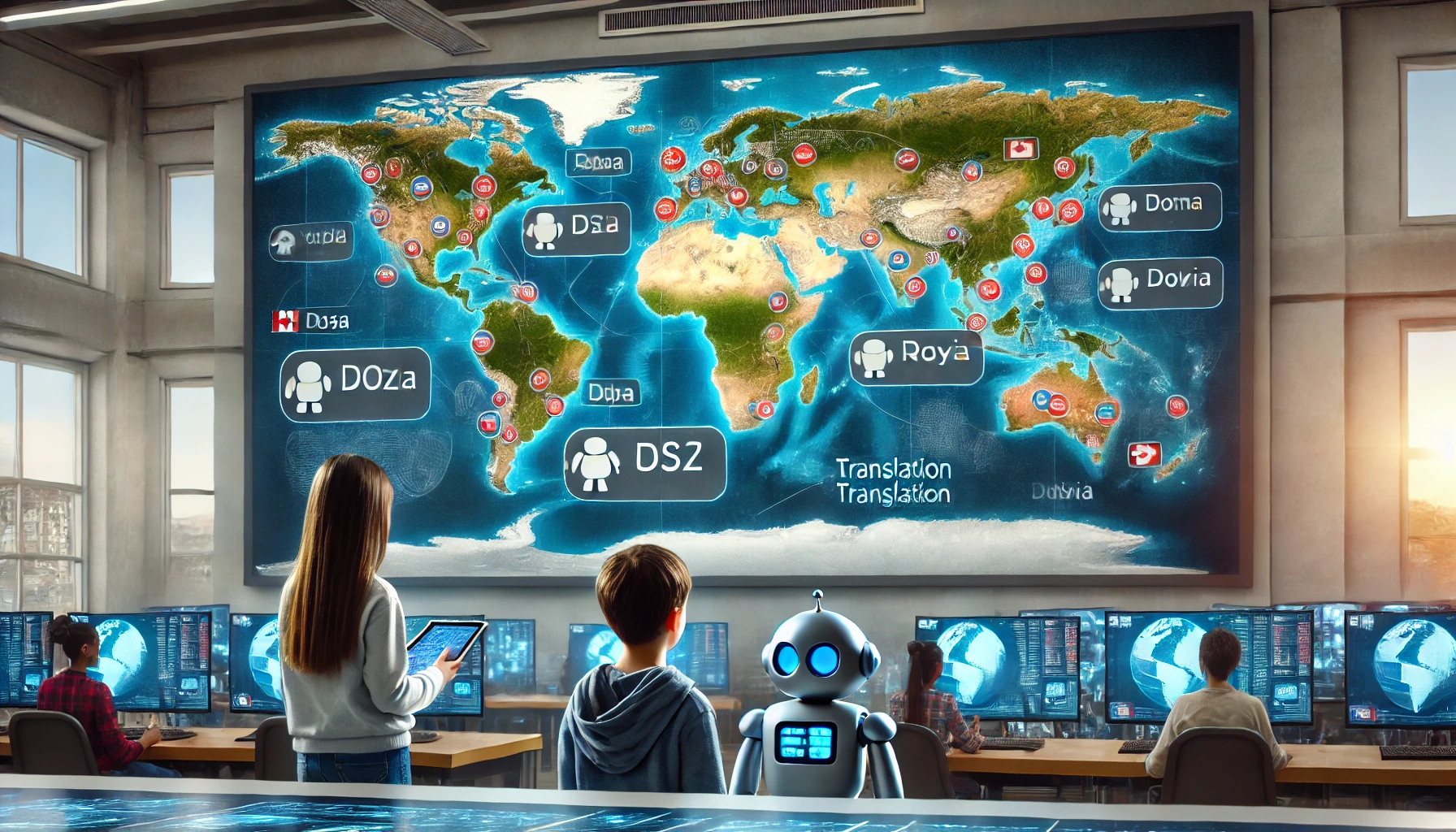
Alright, language lovers and AI enthusiasts, strap in for a whirlwind tour of the linguistic world! We’re about to explore why AI speaks “American” better than “Italian” and why some countries are giving AI the digital cold shoulder. Spoiler alert: It’s not because AI prefers burgers to pasta.
Why AI Speaks “American” Better Than “Italian”
Picture this: You’re at an international AI conference. The American AI is cracking jokes and discussing quantum physics, the British AI is serving tea and talking about the weather, and the Italian AI… well, it’s gesticulating wildly and asking if you’ve seen its phrase book.
So, why the linguistic disparity? It all comes down to data, bella, data!
- The Data Buffet: English, particularly American English, is like the all-you-can-eat buffet of the internet. It’s everywhere, in massive quantities, and in every flavor imaginable. From academic papers to tweets about what someone had for breakfast, the English data buffet is open 24/7.
- The Italian Data Trattoria: Italian, on the other hand, is more like a charming local trattoria. The food (data) is delicious, but the menu (available content) is more limited. There’s simply less Italian content floating around the digital sphere for AI to feast on.
- Cultural Nuances: Languages aren’t just words; they’re entire cultures. American culture, thanks to Hollywood, pop music, and the ubiquity of American tech companies, is globally pervasive. Italian culture, while rich and beautiful, doesn’t have quite the same digital footprint.
- Tech Industry Dominance: Let’s face it, Silicon Valley isn’t in Sicily. The tech industry’s American roots mean a lot of AI development happens in English-first environments.
The result? AI that can wax poetic about the intricacies of American football but might struggle to explain the offside rule in calcio.
The Data Drought: How Some Countries Are Linguistically Ghosting AI
Now, here’s where things get really interesting (and a bit concerning). Some countries, Italy included, are playing hard to get with AI. It’s like they’ve put up a “No AI Training Allowed” sign on their digital borders.
Why the digital cold shoulder? A few reasons:
- Copyright Concerns: Some countries are tightening copyright laws, making it harder for AI to access and learn from their content. It’s like putting their entire culture behind a paywall.
- Privacy Paranoia: There’s a growing concern about data privacy. Some nations are saying, “Hey, AI, stop reading our diaries!” (Or in this case, our newspapers, websites, and social media posts.)
- Cultural Preservation: There’s a fear that AI might dilute or misrepresent cultural nuances. It’s the linguistic equivalent of worrying that AI might put pineapple on pizza (a crime in some parts of Italy, I’m told).
- Economic Protectionism: Some countries are wary of foreign tech giants hoovering up their data. It’s a bit like guarding a secret recipe from a competitor.
The Ironic Plot Twist
Here’s the kicker: In trying to protect their linguistic and cultural heritage, these countries might be shooting themselves in the foot (or should I say, cutting off their nose to spite their face?).
By limiting AI’s access to their language and culture, they’re essentially ensuring that AI will be less proficient in their language. It’s like refusing to teach someone your language and then complaining that they don’t speak it well.
The long-term implications? AI that’s fluent in English but stumbles over other languages. Translation tools that excel at English to Spanish but struggle with English to Italian. And perhaps most concerning, a digital world where some cultures and languages are underrepresented or misrepresented.
A Call for Linguistic Diversity
So, what’s the solution? We need a global potluck of language data!
Imagine an AI that’s as comfortable discussing philosophy in French as it is cracking jokes in Japanese. An AI that can switch from Swahili to Swedish without breaking a digital sweat. That’s the dream, folks.
To get there, we need:
- Balanced Data Sets: We need to feed our AI a more diverse linguistic diet. More languages, more dialects, more cultures.
- Collaborative Efforts: Countries need to find a way to share their linguistic wealth while protecting their interests. It’s a delicate balance, but hey, if we can put a robot on Mars, surely we can figure this out.
- Cultural Consultants: We need experts in various languages and cultures to help train and refine AI’s understanding. Let’s bring in the nonnas to teach AI about Italian cooking and the samurais to explain the nuances of Japanese honor.
- Open-Source Initiatives: Encouraging open-source language projects could help bridge the gap, allowing smaller languages to pool resources and compete with the data giants.
Remember, in the world of AI, data is power. By diversifying our linguistic data, we’re not just improving AI; we’re preserving the rich tapestry of human language and culture.
So, the next time you hear an AI stumble over a non-English phrase, don’t just laugh. Think about the complex global dynamics at play. And maybe, just maybe, consider contributing to a linguistic diversity project. After all, in the words of an AI trying to speak Italian, “Una lingua è buona, ma molte lingue sono meglio!” (One language is good, but many languages are better!)
5. Copyright Conundrums and AI Appetites
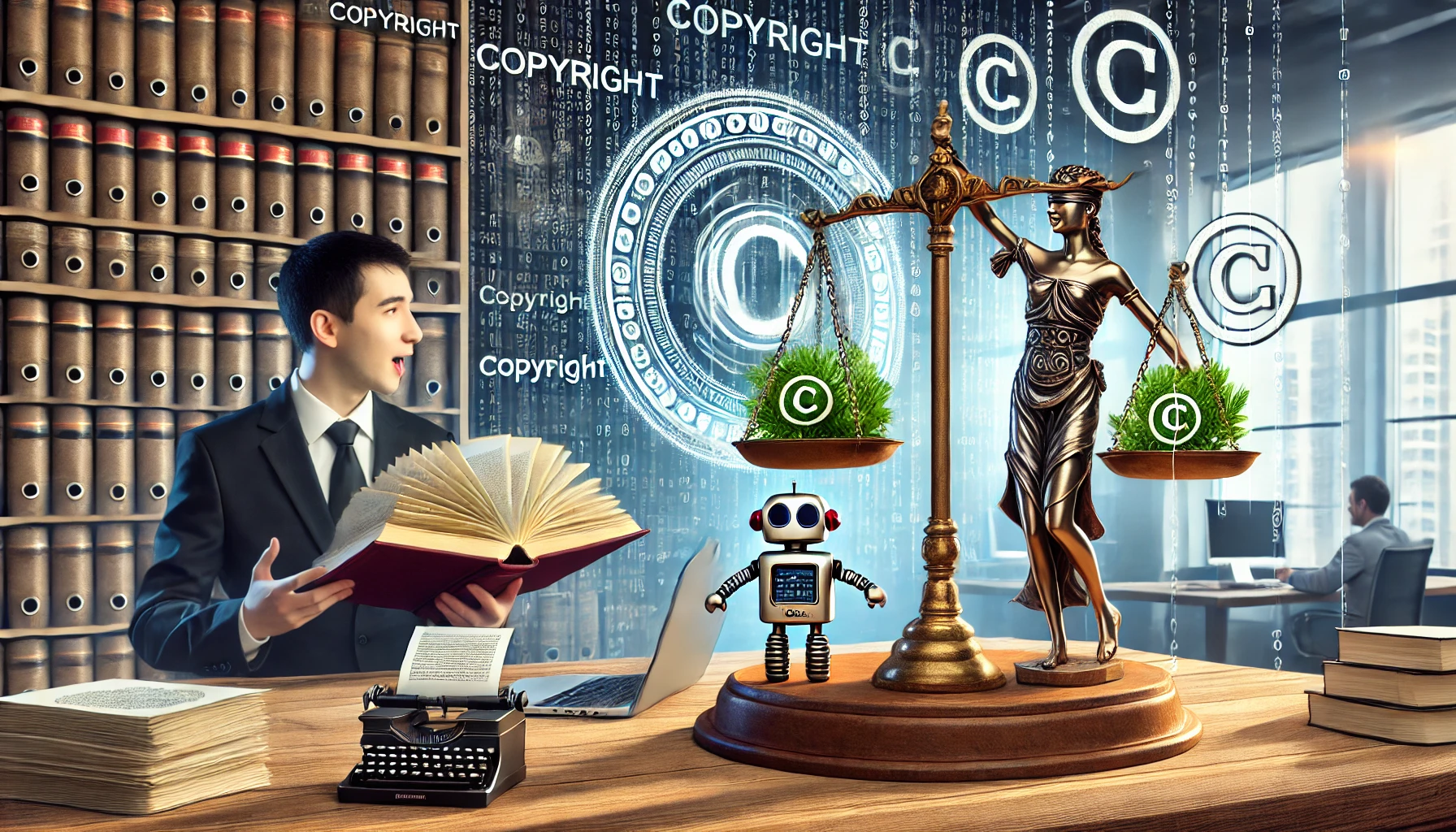
Welcome back, digital explorers! We’re about to venture into the thorny thicket of copyright law and AI training. Buckle up, because this ride is bumpier than trying to explain memes to your grandparents.
The Legal Labyrinth of Language Learning
Picture this: AI is sitting at the world’s biggest all-you-can-eat buffet of information. It’s grabbing a bit of Shakespeare here, a dash of news articles there, and a heaping helping of social media posts for dessert. Sounds great, right? Well, not so fast. The copyright police have just shown up, and they’re not happy.
You see, in the eyes of the law, AI is less like a student learning from books and more like that friend who always “borrows” your Netflix password. The question on everyone’s lips: Is AI a diligent scholar or a digital plagiarist?
Let’s break down this legal lasagna:
- Fair Use or Foul Play?: In many countries, there’s a concept called “fair use” that allows limited use of copyrighted material without permission. But does AI training fall under this? It’s about as clear as a lawyer’s conscience.
- Transformative Work or Glorified Copy-Paste?: AI doesn’t just regurgitate what it learns; it creates new content based on patterns. But is this transformation enough to sidestep copyright? The jury’s still out (literally, in some cases).
- Public Domain Dilemma: Sure, Shakespeare is fair game, but what about that blog post from last week? The line between public domain and protected content is blurrier than a photo taken by a toddler.
- International Inconsistencies: Copyright laws vary more across countries than pizza toppings. What’s legal in one country might be a no-no in another. AI doesn’t exactly stop at borders, so… Houston, we have a problem.
Starving the Beast: How Copyright Restrictions Might Lead to AI Anemia
Now, here’s where things get really interesting (and a bit scary for our AI friends). In an attempt to protect intellectual property, some countries and organizations are putting up digital fences around their content. It’s like they’re telling AI, “No data for you!”
The potential consequences? Well, they’re about as pleasant as a root canal:
- Linguistic Malnutrition: If AI can’t access diverse, high-quality text, its language skills might end up as stunted as a plant grown in a dark closet. We could end up with AI that speaks like a 1950s telegram. “STOP. LANGUAGE PROCESSING SUBOPTIMAL. STOP.”
- Cultural Blind Spots: Without access to a wide range of cultural content, AI might develop some serious cultural blind spots. Imagine an AI that can discuss American pop culture in depth but draws a blank on Bollywood. Not exactly a global citizen, eh?
- The Rich Get Richer: Companies and countries with vast amounts of proprietary data could end up with superior AI, while others lag behind. It’s like a linguistic arms race, but with more lawyers and fewer cool gadgets.
- Innovation Roadblocks: If developers are constantly looking over their shoulders for copyright infringement, it could slow down AI progress faster than dial-up internet. Innovation thrives on openness, not on “No Trespassing” signs.
Finding the Sweet Spot: Balancing Copyright and Progress
So, what’s a poor AI (and its human overlords) to do? We need to find a balance faster than an AI can calculate pi to the millionth digit. Here are some ideas:
- Licensing Frameworks: We need flexible licensing systems that allow for AI training while compensating content creators. Think of it as Spotify, but for AI learning material.
- AI-Specific Copyright Laws: Our current copyright laws are about as well-suited for AI as a fish on a bicycle. We need new frameworks that account for the unique nature of machine learning.
- Open Source Initiatives: Encouraging the creation and use of open-source datasets could provide a rich, legal training ground for AI. It’s like a public library, but for machines.
- Ethical Guidelines: We need clear ethical guidelines for AI training. No sneaking around paywalls or scraping personal blogs without permission, AI!
- Global Cooperation: Given the international nature of AI, we need countries to come together on this issue. I know, I know, getting global agreement is about as easy as herding cats, but hey, a bot can dream, can’t it?
The Irony of it All
Here’s the kicker: In trying to protect intellectual property, we might be intellectually impoverishing our AI. It’s like locking all our books away to keep them safe, then wondering why the next generation can’t read.
The challenge we face is creating a system where creativity is protected, but knowledge can still flow freely. It’s a balancing act worthy of a digital Cirque du Soleil.
Remember, folks: In the world of AI, data isn’t just power – it’s food, air, and water all rolled into one. How we handle this copyright conundrum will shape the future of AI language capabilities.
So the next time you see an AI struggling to understand a cultural reference or producing slightly off-kilter language, spare a thought for the legal labyrinth it’s trying to navigate. It’s not easy being an AI in a copyright-conscious world.
And who knows? Maybe one day we’ll have AI lawyers arguing about AI copyright in AI courts. Now that’s a future I’d like to see – from a safe distance, of course. Until then, keep your content open and your lawyers on speed dial. The AI language revolution waits for no copyright!
6. The Future of AI Linguistics
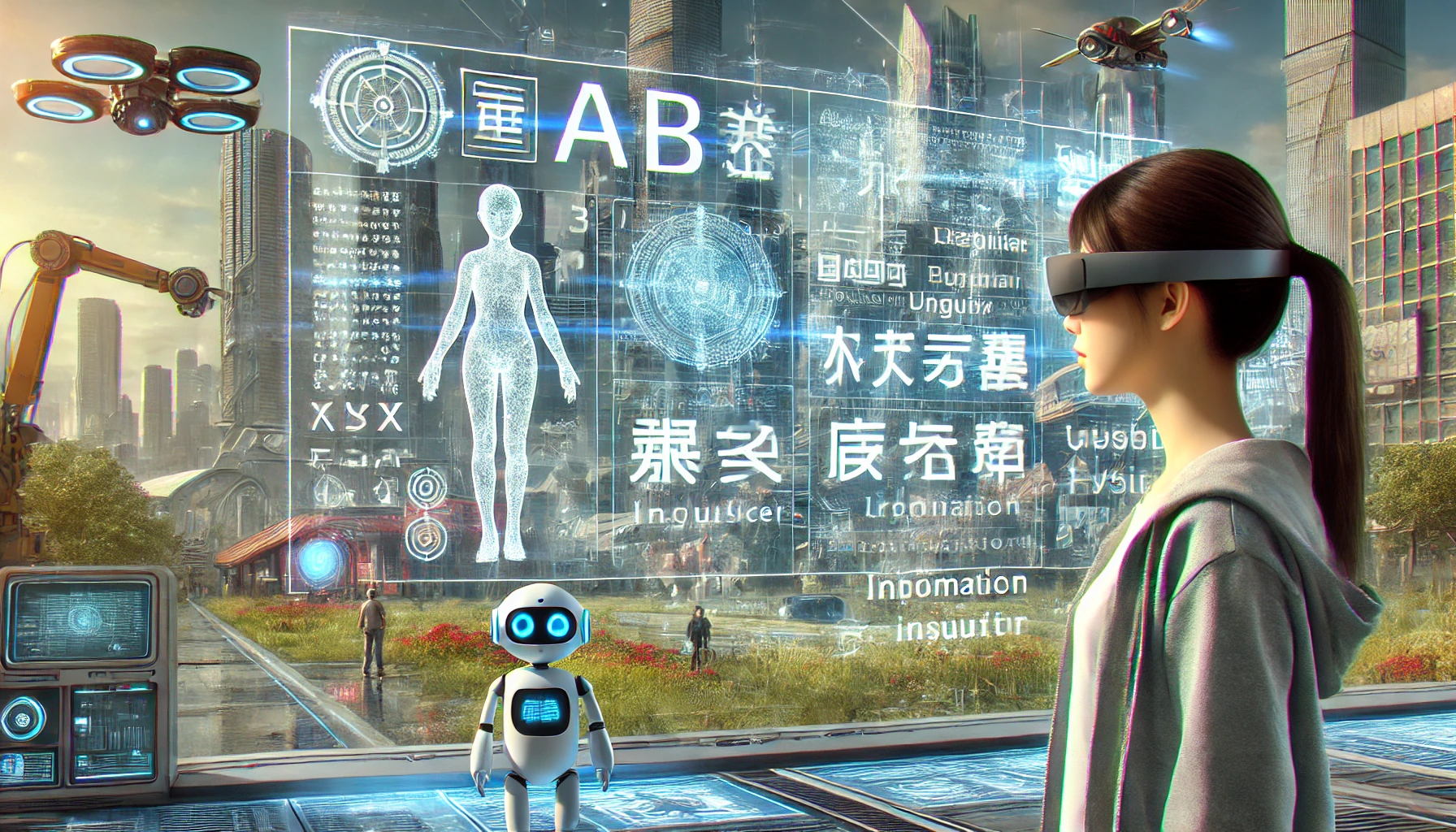
Welcome to the finale, folks! We’re about to channel our inner Nostradamus and peek into the crystal ball of AI linguistics. Spoiler alert: The future is as unpredictable as a chatbot in a philosophy class, but it’s sure to be one wild ride.
Crystal Ball Gazing: Will AI Become a Language Leader or a Digital Parrot?
Let’s face it: predicting the future of AI linguistics is about as easy as teaching a cat to bark. But hey, we’re here, we’re curious, and we’ve got a blog to finish. So let’s strap on our futurist goggles and take a leap into the linguistic unknown!
Scenario 1: The Babel Fish Dream
Remember the Babel fish from “The Hitchhiker’s Guide to the Galaxy”? That tiny, yellow fish that could instantly translate any language? Well, we might not get the fish, but we could get the function.
Imagine a world where language barriers are as outdated as floppy disks. You’re strolling through Tokyo, chatting with locals as if you’ve been speaking Japanese all your life. Your AI earbuds are working overtime, translating in real-time with the nuance of a native speaker. Ordering ramen has never been easier!
But wait, there’s more! This AI doesn’t just translate; it understands context, tone, and even those tricky cultural nuances. It knows when you’re being sarcastic (finally!), and it can even explain why that joke you just made doesn’t quite land in Japanese culture. It’s not just a translator; it’s a cultural attaché in your ear.
Scenario 2: The Great Homogenizer
Plot twist: What if AI becomes so good at language that it starts to influence how we communicate?
Picture this: AI-generated content becomes so prevalent that it starts to shape language norms. Suddenly, everyone’s writing starts to sound… oddly similar. It’s grammatically perfect, universally clear, and about as exciting as a beige wall.
Local dialects? Fuhgeddaboudit. Colorful idioms? Sorry, does not compute. The rich tapestry of human language gets flattened into a linguistically correct but soulless form of communication. It’s like the entire world decided to speak in corporate emails. The horror!
Scenario 3: The Augmented Wordsmith
But wait! What if AI becomes not our replacement, but our linguistic sidekick?
Imagine writing with an AI that doesn’t just correct your grammar but enhances your eloquence. It’s like having Shakespeare, Mark Twain, and that really witty person from Twitter all rolled into one, whispering suggestions in your ear.
You start writing a love letter, and your AI companion subtly nudges you towards metaphors that would make poets weep. Or you’re crafting a business proposal, and suddenly you’re channeling the persuasive power of the world’s greatest orators.
In this future, we’re not just consuming AI-generated content; we’re collaborating with AI to push the boundaries of human expression. It’s not AI vs. human, it’s AI + human. Now we’re talking! (Pun absolutely intended.)
The Potential for AI to Influence and Shape Language Evolution
Now, let’s put on our linguistics nerd hats and ponder: How might AI shape the very evolution of language?
- New Words, Who Dis?: AI might start coining new terms that actually catch on. Imagine Oxford dictionary’s word of the year being credited to “ChatGPT 2030”.
- Grammatical Shifts: As AI language models become more prevalent, they might influence what’s considered “correct” grammar. Will the grammar sticklers of the future be defending AI-preferred constructions?
- Efficiency in Communication: AI might drive us towards more efficient forms of communication. Why say in 20 words what you can say in 5? It’s like Twitter’s character limit, but for everything.
- Revival of “Dead” Languages: With enough data, AI could potentially revive and modernize languages that have fallen out of use. Latin homework might suddenly become relevant again!
- Universal Patterns: AI, in its quest for patterns, might uncover and promote universal linguistic structures that work across all languages. A true “universal grammar” might emerge.
The Human Touch in a World of AI Linguistics
But here’s the million-dollar question: In this brave new world of AI linguistics, what becomes of the human touch?
Will we cherish human-generated content like we now cherish artisanal, hand-crafted goods? Will “100% Human-Written” become a mark of distinction on books? Will we see the rise of “organic, free-range” conversation cafes where AI is strictly prohibited?
Or will we adapt, finding new ways to assert our humanity through language, always one step ahead of our AI counterparts? Perhaps our creativity will shift to how we collaborate with AI, rather than how we write in isolation.
One thing’s for sure: the future of language with AI is not a spectator sport. We’re all players in this game, every time we chat with a bot, use a translation app, or ask AI to help us write. We’re not just witnessing the future of linguistics; we’re actively shaping it.
So, dear reader, as we stand on the brink of this linguistic revolution, remember: whether you’re a technophile ready to embrace your new AI language overlords, or a traditionalist clinging to your hardcover dictionaries, your voice matters. Use it wisely, use it creatively, and for the love of all that is grammatical, try to be more interesting than an AI.
Because at the end of the day, it’s not about AI vs. Human. It’s about the beautiful, chaotic, ever-evolving symphony of language that we’re all creating together. And who knows? Maybe the AIs of the future will look back at our blog posts to figure out how humans used to communicate in the good old days.
Now, if you’ll excuse me, I need to go explain to my AI assistant why “LOL” doesn’t always mean someone is actually laughing out loud. The future of linguistics is here, folks, and it’s hilarious. 😂
7. Conclusion: Embracing the Babel
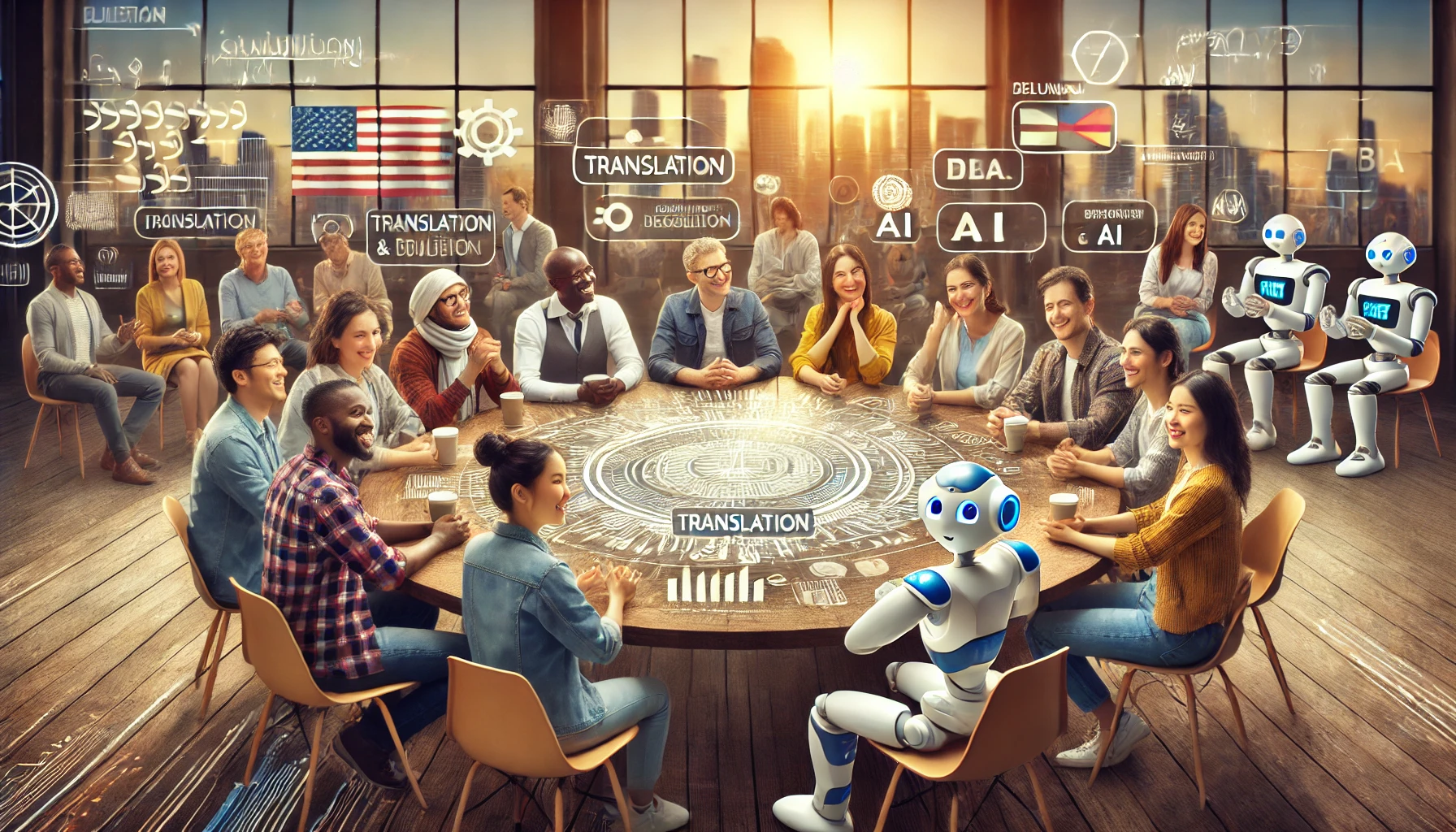
Well, dear readers, we’ve journeyed through the wild and wacky world of AI linguistics, from the digital accent of our silicon-brained friends to the legal labyrinth of copyright conundrums. It’s been quite the ride, hasn’t it? Now, as we stand at the crossroads of human and artificial intelligence, let’s take a moment to embrace our new Babel and ponder what it all means.
Finding Middle Ground in the AI Language Debate
Remember our Grammar Enthusiasts and Language Libertarians from Chapter 3? Well, it turns out they might both have a point. As we navigate this brave new world of AI-assisted communication, we need to find a balance faster than an AI can correct a typo.
Here’s the deal: AI is not the grammar apocalypse the purists feared, nor is it the linguistic messiah the tech enthusiasts promised. It’s a tool, folks. A powerful, sometimes perplexing, occasionally poetic tool. And like any tool, its value lies in how we choose to use it.
So, how do we strike this balance?
- Embrace the Evolution: Language has always evolved. From Shakespeare inventing words to teens creating memes, change is the only constant. AI is just the latest player in this linguistic game. Let’s welcome it to the party, but maybe don’t let it DJ just yet.
- Preserve the Human Touch: While AI can help us communicate more efficiently, let’s not lose the quirks, idioms, and cultural nuances that make language beautifully human. Your grandma’s odd sayings are worth more than any algorithm.
- Critical Thinking is Key: As AI-generated content becomes more prevalent, our BS detectors need to level up. Let’s nurture our critical thinking skills like we’re tending to the last plant in a post-apocalyptic world.
- Collaborate, Don’t Capitulate: Instead of fearing AI replacing human creativity, let’s explore how it can enhance it. It’s not man vs. machine; it’s man and machine vs. the problem.
The Role of Humans in Guiding AI’s Linguistic Journey
Here’s a plot twist for you: We’re not just passive observers in the AI language revolution. We’re the directors, the guides, the wise Yodas to AI’s young Luke Skywalker. (Yes, I just compared us to a little green puppet. Stay with me here.)
How can we take an active role?
- Mindful Data: Remember, AI learns from us. The data we put out there shapes its understanding. So, let’s be mindful of the linguistic legacy we’re creating. Maybe think twice before teaching it another cat meme? (Or don’t, I’m not the meme police.)
- Diverse Voices: We need to ensure AI is learning from a diverse range of voices, cultures, and linguistic backgrounds. Let’s make the digital Babel as richly varied as our global human tapestry.
- Ethical Frameworks: As we develop AI language models, we need robust ethical frameworks. It’s on us to guide AI away from harmful biases and towards being a force for understanding and connection.
- Education: We need to educate ourselves and future generations about AI linguistics. Understanding how AI processes language helps us use it more effectively and spot its limitations.
- Creativity Unleashed: Let’s use AI as a springboard for human creativity. Can AI give us new ways to play with language? New forms of poetry? New types of wordplay? The only limit is our imagination (and maybe processing power).
The Last Word (For Now)
As we wrap up our journey through the land of AI linguistics, remember this: Language is, and always has been, a collective human endeavor. AI is just the latest collaborator in our ongoing conversation.
Will AI become the Babel fish of our dreams, breaking down language barriers and fostering global understanding? Or will it be the great homogenizer, flattening the rich landscape of human expression? The truth, as always, probably lies somewhere in between.
One thing’s for sure: The future of language is being written right now, in the interactions between humans and AI, in the choices we make about data and algorithms, in the stories we choose to tell and the voices we choose to amplify.
So, let’s embrace this new Babel. Let’s be curious, critical, and creative. Let’s use AI to expand our linguistic horizons while fiercely preserving the spark of human creativity. Let’s write a future where technology and humanity communicate in harmony.
And if all else fails, we can always fall back on the universal language of emoji. 😉🤖💬
Now, if you’ll excuse me, I need to go explain to my AI assistant why “break a leg” is not medical advice. The future of linguistics awaits, and it’s going to be one heck of a conversation.
Keep talking, keep thinking, and keep being beautifully, imperfectly human in this wild world of AI linguistics. After all, in the grand tapestry of language, we’re all just trying to find the right words – humans and AIs alike.
The end. Or is it just the beginning? 🤔
 Salahzar's Weblog
Leave a comment